
Introduction to Crypto Correlation Analysis
In recent years, the cryptocurrency market has seen explosive growth, with a market capitalization surpassing $2 trillion in 2021. The volatility eventually led to massive fluctuations in prices and market dynamics. With $4.1 billion lost to DeFi hacks in 2024, understanding the intricate relationships between different cryptocurrencies has become increasingly essential for investors. This is where crypto correlation analysis comes into play. By examining the correlations between currencies, one can better assess risks, diversify portfolios, and formulate more informed trading strategies.
What is Crypto Correlation Analysis?
Crypto correlation analysis involves statistical methods used to measure the extent to which two or more cryptocurrencies move in relation to each other. A high positive correlation implies that the currencies move together in the same direction, whereas a high negative correlation indicates they move in opposite directions. For example, if Bitcoin (BTC) rises, and Ethereum (ETH) typically moves in the same direction, they have a high positive correlation.
Understanding these correlations can provide insights into market movements and help in minimizing risks. As the crypto sphere evolves, analyzing these relationships will remain integral for both institutional and retail investors.
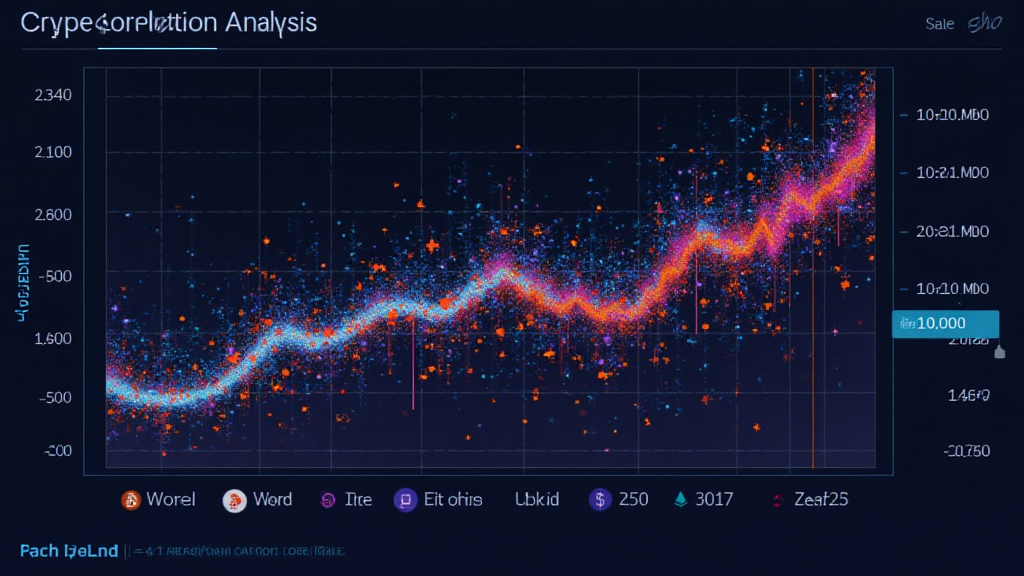
Why is Crypto Correlation Important?
- Risk Management: Diversifying investments across cryptocurrencies with low correlation can mitigate risks. This strategy can reduce the impact of a downturn in one asset.
- Portfolio Optimization: Investors can adjust their portfolios based on the correlation coefficients, focusing on pairs that add diversification benefits.
- Market Trends: Correlation analysis helps investors identify market trends and make more explicit trading decisions.
Data-Driven Insights and Trends
Recent studies have shown various significant correlations in the cryptocurrency market. For instance, Bitcoin often shows high correlation with Litecoin (LTC) and Ethereum, particularly during bullish trends. Below is a table demonstrating various correlations within the last year:
| Cryptocurrency Pair | Correlation Coefficient (1 Year) |
|---|---|
| BTC / ETH | 0.85 |
| BTC / LTC | 0.75 |
| ETH / LTC | 0.78 |
| XRP / DOT | 0.23 |
Source: CoinMetrics
Practical Applications of Correlation Analysis
Investors can utilize crypto correlation data in practical scenarios. Here’s how:
- Trading Strategies: Investors trading on exchanges can leverage correlation coefficients to predict price movements. For instance, if BTC experiences significant movement, investors may look towards ETH for a potential similar response.
- Market Prediction: By observing the correlation during market changes, traders can anticipate potential market downturns or booms.
Understanding Local Market Dynamics: Vietnam Case Study
In the Vietnamese market, the growth rate of cryptocurrency users has increased by over 25% in the past year. This is a prime example of how local markets can influence crypto correlation analysis. As more Vietnamese investors engage with international markets, understanding the correlations becomes vital.
The rise in user engagement correlates strongly with the national interest in blockchain technology. As a result, Vietnamese cryptocurrencies might also start showing increased correlations with larger cryptocurrencies, notably Bitcoin and Ethereum, due to the influx of investors learning from established trading habits.
Challenges in Crypto Correlation Analysis
- Market Irregularities: The market can be adversely affected by unexpected events, leading to rapid changes in correlation patterns.
- Influence of External Factors: News and regulations, such as tiêu chuẩn an ninh blockchain (blockchain security standards), can instantly alter the correlations.
Tools to Enhance Correlation Analysis
Investors often utilize various tools to perform correlation analysis, including:
- Statistical Software: Tools like R and Python packages help analyze historical data, calculate correlations, and visualize trends.
- Portfolio Management Platforms: Tools like CoinMarketCap can provide insights into correlations between different cryptocurrencies, helping investors strategize better.
Conclusion
In conclusion, crypto correlation analysis is essential for any investor looking to make informed decisions in the dynamic landscape of cryptocurrencies. As the market evolves, so does the need to comprehend the shifting correlations that can affect investments. By adopting this analysis, traders not only enhance their risk management strategies but also gain clarity on potential opportunities and growth within the ever-growing crypto ecosystem.
Ensure you keep abreast of market trends and regularly analyze crypto correlations to make the most educated decisions. Remember, informed trading is always more effective than guessing.
You can find more about investing and crypto insights on hibt.com. For a more robust perspective, look into our local Vietnam crypto tax guide as well.
Author: Dr. Alex Johnson
Dr. Johnson is a seasoned expert in the field of blockchain technology with over 15 published papers and has led numerous notable audits in the cryptocurrency sector.