

Central Bank Digital Currency Vietnam: Future Insights and Opportunities
As of 2024, the global digital currency landscape has transformed significantly, with an increasing buzz around Central Bank Digital Currencies (CBDCs). With Vietnam’s rising interest in digital finance and blockchain technology, discussions surrounding the introduction of a CBDC have become more relevant. In fact, the Vietnamese government has expressed ambitions to explore the potential benefits of a digital currency by 2025.
According to a 2023 report by Statista, Vietnam’s digital economy is predicted to reach $30 billion by 2025, which highlights the importance of integrating efficient and secure payment systems like a CBDC. How can Vietnam navigate the complexities of introducing a CBDC while ensuring security, accessibility, and stability?
The Emergence of CBDCs: A Global Perspective
To understand Vietnam’s positioning, we need to explore the global trend towards CBDCs. Over 80% of central banks are participating in some form of CBDC research or development, with notable examples emerging from China, the European Union, and the Bahamas. For instance, in 2022, China launched its digital yuan as a pilot program in several major cities, showcasing the advantages of improved transaction speed and reduced costs.
Why CBDCs Matter
- Financial Inclusion: CBDCs can enhance accessibility for underbanked populations, especially in developing countries.
- Transaction Efficiency: Enhancements in transaction speeds could streamline payments both domestically and internationally.
- Counteracting Cryptocurrencies: National digital currencies could help mitigate risks associated with uncontrolled cryptocurrencies.
For Vietnam, a CBDC could serve as a catalyst for economic growth and innovation, particularly as the nation seeks to boost its e-commerce and digital payment sectors.
Vietnam’s Economic Landscape: The Digital Currency Imperative
Vietnam’s economy is rapidly digitizing, with a notable increase in e-wallet usage and online transactions. Recent studies indicate that Vietnam’s online shopping market will reach $23 billion by 2025, and the country saw over 50% year-over-year growth in digital payment transactions in 2023. As more people get connected, the demand for faster, more secure payment systems rises.
This prompts the question: how can a CBDC enhance Vietnam’s economic growth and stability? Government officials emphasize setting regulatory standards, such as tiêu chuẩn an ninh blockchain, to ensure safety against cyber threats.
Expected Benefits of CBDC Implementation
- Strengthened Monetary Policy: A CBDC could provide the state with real-time data to enhance monetary policy decisions.
- Reduced Costs: Transaction fees could be minimized, benefiting both businesses and consumers.
- Enhanced Security: With blockchain technology, CBDCs offer a more secure framework for transactions.
Challenges Ahead: Navigating Risks and Regulatory Concerns
While the potential benefits are substantial, several challenges must be addressed before implementing a CBDC in Vietnam. One major concern is the potential impact on the traditional banking sector. Banks may face reduced demand for their services if consumers prefer using a state-backed digital currency.
Moreover, regulatory frameworks must be established not just for the CBDC itself, but also for the associated technological ecosystem. Key considerations include privacy, cybersecurity, and the prevention of illicit activities.
Building Trust and Legitimacy
- Public Education: Engaging the public through education and outreach programs is essential to build trust in the CBDC.
- Transparent Regulations: Clear guidelines will foster confidence among users and institutions alike.
- Collaboration with Experts: Partnering with blockchain and fintech experts can provide insights into best practices.
Looking Forward: Vietnam’s CBDC Roadmap
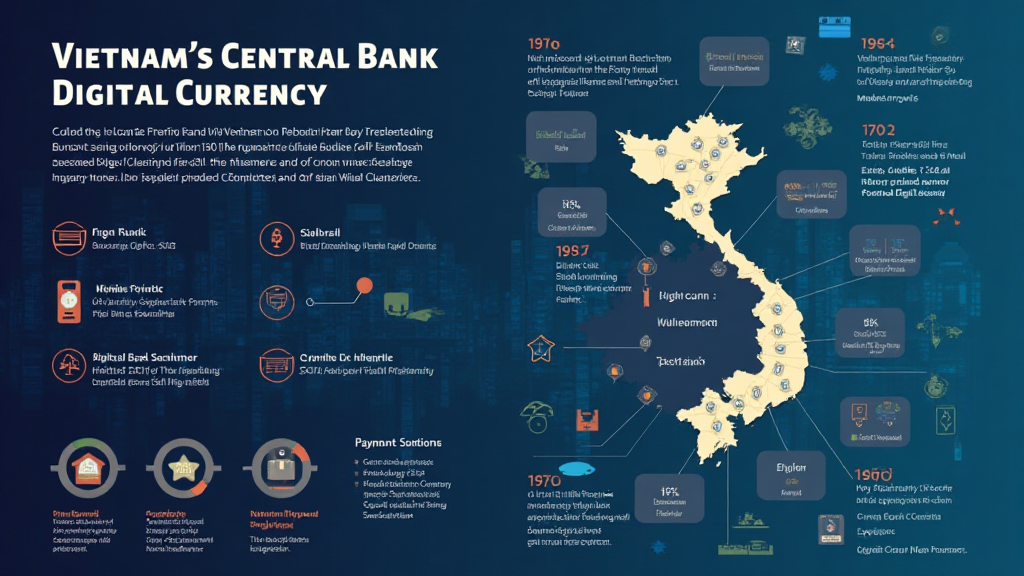
In March 2024, the State Bank of Vietnam announced a roadmap for the exploration and pilot testing of a digital currency, set to coincide with the 2025 digital transformation strategy. This roadmap highlights:
- Phased approaches to pilot programs in designated districts.
- Stakeholder engagement including banks, merchants, and consumers.
- Assessment frameworks for evaluating the effectiveness and impact of the CBDC.
This structured rollout aims to establish a robust foundation before committing to widescale implementation, ensuring that stakeholders understand both benefits and potential risks.
Real-world Examples to Learn From
- China: The digital yuan offers valuable lessons in piloting and public acceptance strategies.
- Sweden: The e-krona project demonstrates collaboration and transparency in regulatory processes.
- Bahamas: Sand Dollar serves as a remarkable case of financial inclusion through digital currency.
Conclusion: Embracing the Future of Currency in Vietnam
In summary, Vietnam stands on the brink of significant changes in its financial infrastructure with the potential introduction of a Central Bank Digital Currency. With a projected digital economy of $30 billion by 2025, the urgency and importance of adopting a secure and efficient payment solution is unquestionable.
By addressing the associated challenges, engaging in comprehensive pilot programs, and building foundational trust with the public, Vietnam can harness the power of the digital economy to improve financial accessibility and stimulate growth in various sectors. The journey towards a CBDC represents not just an opportunity for innovation, but also a commitment to the future of finance in Vietnam.
For more information about maintaining a competitive edge in the evolving financial landscape, explore more at cryptosalaryincubator.